
Recognising and Managing Breastfeeding Problems
Breastfeeding is often portrayed as instinctive and effortless, but many mothers discover that the early days can be physically challenging in ways they never expected. While the benefits of breastfeeding are widely discussed, the difficulties, like painful latching, engorgement, blocked ducts, or mastitis, are talked about far less openly. This can leave new mothers feeling surprised, discouraged, or even alone when problems arise.
In Singapore, hospital stays after birth are typically short, which means many women head home before breastfeeding is fully established. Once they’re home, these challenges can surface quickly, often without immediate, hands-on support. According to local guidance from HealthHub Singapore and KK Women’s & Children’s Hospital (KKH), these issues are extremely common, highly treatable, and usually temporary with the right help.
Experienced lactation consultant, Mayvina, from Manna Milk Lactation provides personalised guidance that addresses the root causes of breastfeeding discomfort. With skilled observation and gentle correction, mothers receive the practical, real-time help needed to navigate these early challenges confidently and comfortably.
Why Early Breastfeeding Can Feel Physically Difficult
After birth, hormones shift rapidly to trigger milk production. As milk “comes in,” breast fullness increases suddenly, making the breast feel taut or firm. This can make it harder for babies to latch deeply, especially when the areola becomes swollen.
At the same time, babies are still developing the coordination needed for effective feeding. Their mouth shape, tongue movement, jaw strength, and sucking rhythm are all still maturing. When a baby’s latch technique doesn’t match the breast’s fullness or when milk flow is inconsistent, discomfort can happen for both mother and baby. According to HealthHub SG and KKH, many early breastfeeding problems stem from this temporary mismatch between maternal physiology and a newborn’s developing feeding skills.
Latching Problems: Signs, Causes & Gentle Solutions
Signs of an Ineffective Latch
Unlike the classic textbook descriptions of what a latch should look like, the reality is that mothers often identify latch problems first by how it feels. Common signs include:
Persistent pain throughout the feed, not just at the beginning
Baby slipping off frequently, unable to maintain suction
Clicking or smacking sounds, indicating air intake
Long feeding sessions with little swallowing
Baby falling asleep very quickly, suggesting low milk transfer
Your breast still feeling full even after feeding
Why Latching Issues Happen
Engorgement or swelling, which makes it harder for baby to latch deeply
Baby’s jaw or neck tension, especially after long labours or assisted births
Shallow latch habits, where baby stays on the nipple rather than drawing in the areola
Variations in baby’s anatomy, such as a small mouth, recessed chin, or tight oral muscles
Fast or slow milk flow, causing baby to adapt by clamping or pulling off
These issues are extremely common, especially in the first two weeks, and often correctable with hands-on guidance.
Gentle Ways to Improve the Latch
Strategies that often help include:
Adjusting the angle of baby’s chin so it presses deeper into the breast
Supporting baby’s neck and shoulders, not the back of the head, to avoid pushing
Using breast shaping (“breast sandwich”) techniques to help babies achieve a deeper latch
Releasing suction gently using a finger to avoid nipple trauma
Trying different holds such as the football hold or laid-back breastfeeding, which can help babies who struggle with head control
When a latch issue persists, personalised assessment is especially helpful. Lactation consultants like Mayvina can identify subtle problems, like uneven jaw movement or compensatory sucking patterns, that are difficult to spot on your own. Early support often prevents the progression to engorgement, blocked ducts, or recurrent breast pain.
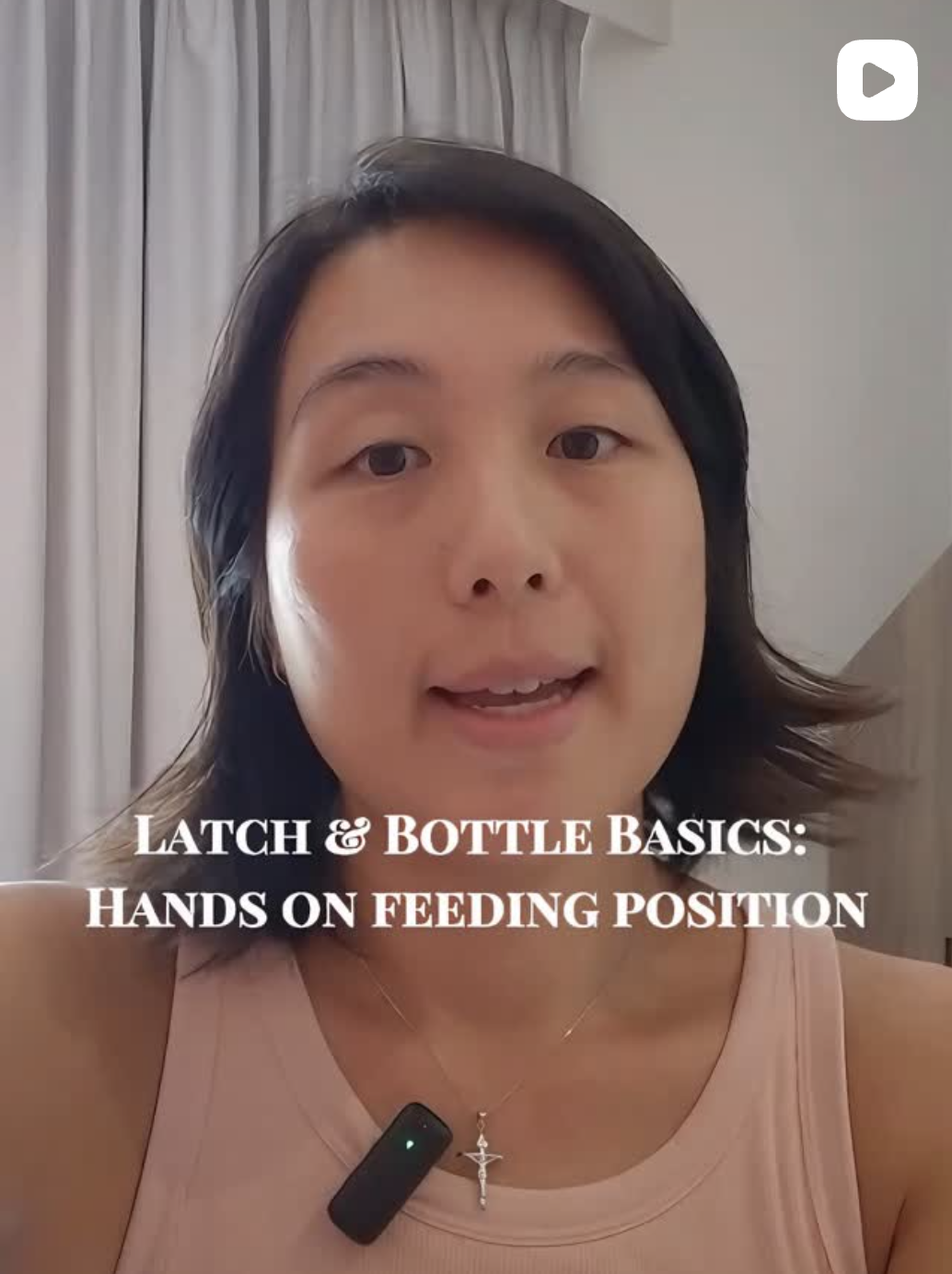
Manna Milk on Instagram, @manna.milk.lactation
Engorgement: What It Feels Like & Why It Happens
Engorgement is one of the most common early breastfeeding challenges, and for many mothers, it comes as a surprise. It typically appears when milk transitions from colostrum to mature milk, usually around day 3 to 5 postpartum, causing the breasts to feel suddenly fuller, heavier, or even uncomfortably swollen. While this change is completely normal, the physical sensations can be intense, especially for first-time mums who may not know what to expect.
According to local guidance from HealthHub Singapore and KKH, engorgement happens when there is more milk in the breast than what is being removed. This can occur for several reasons: baby may still be learning to latch effectively, feeds may be spaced out too far, or the breast may simply be adjusting to rapid increases in milk volume. Singapore’s warm climate can also contribute to increased breast swelling or tenderness, as heat naturally amplifies inflammation and discomfort.
How Engorgement Feels
Many mothers describe engorgement as:
Breasts feeling very full, heavy, or firm
Skin appearing tight, shiny, or stretched
A warm or throbbing sensation around the breast
The areola becoming swollen or too hard, making it difficult for baby to latch
Discomfort that worsens when lying on the side
These symptoms are temporary, but without proper management, engorgement can make feeding painful and may progress to blocked ducts.
Gentle Ways to Relieve Engorgement
Local hospital guidelines emphasise softening the breast and improving milk flow using techniques that are gentle on breast tissue. Effective approaches include:
Reverse Pressure Softening: Lightly pressing around the base of the nipple to move swelling away and make latching easier.
Warmth Before Feeding: A warm compress or brief warm shower helps stimulate milk flow.
Gentle Hand Expression: Soft, short expressions to relieve pressure, instead of strong pumping.
Cool Compress After Feeding: Helps soothe inflammation and reduce swelling.
Frequent, comfortable feeding: Short, frequent feeds often relieve engorgement more effectively than long gaps.
When Engorgement Needs Attention
Engorgement that lasts more than a few days, prevents latching, or causes significant pain should be addressed early. Without proper resolution, it can progress into blocked ducts or mastitis. A lactation consultant can help identify why milk isn’t being removed effectively. With timely guidance, engorgement usually resolves quickly and comfortably.
When to Engage a Lactation Consultant
While many breastfeeding challenges can improve with small adjustments, there are certain moments when getting professional support can make an immediate and meaningful difference. A lactation consultant provides skilled assessment, hands-on correction, and reassurance at a time when many mothers feel vulnerable or unsure.
You may benefit from seeing a lactation consultant if:
Pain continues beyond the first minute of feeding, or returns throughout the feed
Your baby struggles to transfer milk, even with frequent attempts
Blocked ducts keep returning, which often signals an underlying latch or positioning issue
Positioning is difficult, especially after a C-section or when mobility is limited
You feel emotionally overwhelmed, anxious, or discouraged by feeding challenges
Many of these issues have root causes that are not easy to detect without trained eyes, including problems such as jaw tension, shallow latch patterns, or positional pressure on breast tissue.
Through on-site assessments, Mayvina from Manna Milk Lactation observes feeding as it naturally happens in your own environment. She identifies issues that aren’t obvious, makes gentle hands-on adjustments to improve latch and positioning. Her guidance also extends beyond the newborn phase. From navigating breastfeeding after returning to work, to adjusting feeding strategies during growth spurts or developmental changes, Mayvina from Manna Milk Lactation provides tailored support that fits seamlessly into Singapore’s fast-paced routines and diverse family lifestyles.
For more details and to make a booking, download the CradleNest app (available on Google Play and Apple Store) today. Alternatively, get in touch via WhatsApp at +65 8845 8011. Follow us on Instagram (@cradlenestsg) for updates, tips, and a peek into our growing community!
This article was informed by resources from the following:
HealthHub Singapore — Breastfeeding: Common Challenges & Management
HealthHub Singapore — Feeding Your Baby: Breastfeeding Guides
KK Women’s & Children’s Hospital (KKH) — Breastfeeding Support & Resources
KK Women’s & Children’s Hospital (KKH) — Managing Engorgement, Blocked Ducts & Mastitis
National University Hospital (NUH) — Breastfeeding Support & Lactation Care
National University Polyclinics (NUP) — Mastitis & Blocked Ducts Guidance
Health Promotion Board (HPB) — Breastfeeding & Milk Expression Tips
Article written for CradleNest SG.
